Which kerb ramp do I need?

A few measurements get you most of the way. Or skip the homework: send us a photo and a person picks it for you.

Skip to getting help ↓
  1. Measure the heightFrom the road to the top of the kerb lip, in millimetres.
  2. Check the shapeRolled edge (rounded), layback (sloped into the driveway) or straight edge (a square step).
  3. Check the weightEvery ramp below shows what it is rated to carry.

Three that suit most people

Best Seller

Heeve Driveway Rubber Kerb Ramp in 1.2m Sections for Rolled-Edge Kerb

(116)
  • Length1200mm
  • Holds10,000kg
  • Made ofRubber
Regular price $159
$144.55 ex GST
In stock, ships next business day
View details
Best Seller

Heeve Premium Rubber Driveway Ramp 1.2m - Centre Module

(6)
  • Length1200mm
  • Holds10,000kg
  • Made ofRubber
Regular price $209
$190 ex GST
In stock, ships next business day
View details
Best Seller

Heeve Premium Rubber Driveway Ramp 1.2m - End Module

(8)
  • Length1200mm
  • Holds15,000kg
  • Made ofRubber
Regular price $209
$190 ex GST
In stock, ships next business day
View details
See all 34 kerb ramps →
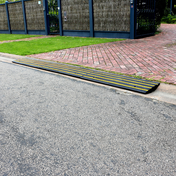
Heeve heavy-duty rubber kerb ramp fitted across a driveway kerb

Not sure? We'll help find the right ramp.

Tell us what you are fitting it to and send a photo. Our kerb ramp experts will reply with the ramp that fits.

Rather chat? SMS 0428 868 345 or Call 1300 913 047

Guides

FAQs

What is the difference between a kerb ramp, a driveway ramp and a gutter ramp?

They are mostly the same thing called three different names. Kerb ramp is the trade word. Driveway ramp is what most people search for. Gutter ramp usually means the shallower profile that sits in the channel rather than over the whole kerb.

What actually matters is the shape of your kerb, not the name. A rolled edge kerb is the rounded one. A layback is the angled section a driveway already crosses. A straight kerb is the square-faced one. We stock ramps cut for all three, so measure the kerb first and pick from there.

Do I need a rolled edge ramp or a layback ramp?

Look at where the kerb meets the road. If it curves over in a smooth arc, that is a rolled edge and you want a rolled-edge ramp. If it drops away at an angle, usually because a driveway already crosses it, that is a layback.

Getting it wrong is the most common reason a ramp rocks or sits proud. The rubber profile is cut to match one shape or the other, so a rolled-edge ramp on a layback kerb will never sit flat.

Will a rubber driveway ramp block the gutter when it rains?

Not if you get the right one. Most of the rubber kerb and driveway ramps we stock are moulded with a water channel underneath, so stormwater keeps running along the gutter instead of banking up behind the ramp. The product page says so where it applies.

One to know about: on the Barrier Group gutter ramp the channel is 12 x 70mm and you trim the cover panels off the ends to open it up. Easy to miss if you do not read the instructions.

This is worth getting right because drainage is the single most common reason a council or a body corporate objects. A solid slab of rubber with nothing under it will dam the gutter, and that is what causes the complaint.

How high a kerb will these ramps handle?

Our kerb and driveway ramps run from 38.5mm for a steel kerb plate up to 120mm for the portable trolley ramp, with most of the rubber range sitting at 60mm to 110mm.

Measure from the road surface to the top of the kerb, at the exact spot the wheels will cross. Kerbs are rarely a consistent height along their length, so measure where you actually drive, not at the corner.