Ever tried getting a heavy mower, motorbike or piece of equipment into a ute and thought, there has to be an easier way than lifting it?
That’s exactly where a ramp earns its keep. A ramp is an inclined plane, one of the six basic simple machines. Rather than lifting a load straight up, it gives you a longer, sloped path to the same height. That means you can use less force at any one time, making heavy or awkward loads easier to manage.
In this guide, we’ll explain how an inclined plane like a ramp works as a simple machine, why longer and gentler ramps generally require less force, and what that simple bit of physics means when you’re loading equipment in the real world.
What Is an Inclined Plane?
An inclined plane is simply a flat surface set at an angle between two different heights. Instead of lifting an object vertically from one level to another, you move it along the slope. A ramp is one of the most familiar examples of an inclined plane.
Where Do We See Inclined Planes Every Day?
You probably use inclined planes more often than you realise. Common examples include:
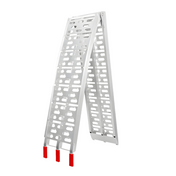
- Loading ramps used to move motorcycles, mowers and machinery into utes, vans and trailers
- Mobility ramps that provide access between different levels for wheelchairs and mobility equipment
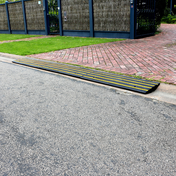
- Driveways connecting the road and a higher or lower property
- Sloped walkways creating a gradual transition between levels
- Slides providing a sloping surface to move from a higher point to a lower one
They all have different purposes, but the basic principle is the same: provide a sloped surface between two heights.

Sloped surfaces trade distance to reduce required effort.
Why Is a Ramp Considered a Simple Machine?
A simple machine doesn’t need an engine, motor, or even moving parts. It simply changes how force is applied to help perform a task. A ramp does this by allowing you to move a load over a longer distance rather than lifting it directly to the required height. This gives you what physicists call mechanical advantage.
Put simply, you trade distance for force: the load travels further, but less force is needed to raise it. For two ramps reaching the same height, the gentler incline generally provides greater mechanical advantage.
So, How Does an Inclined Plane Make Work Easier?
Here’s the simplest way to picture it.

Ramps reduce force by extending lifting distance.
Imagine you need to get a heavy piece of wheeled equipment onto a trailer. You could try to lift it directly from the ground to the trailer deck, or you could move it along a ramp.
- Lift it directly: more force over a shorter distance
- Use a ramp: less force over a longer distance
That trade-off is the key reason an inclined plane makes a task easier. Rather than getting rid of the effort altogether, a ramp spreads that effort over a longer distance.
Does a Ramp Reduce the Amount of Work?
This is where everyday language and physics are slightly different.
In physics, work has a specific meaning. In an ideal situation without friction, raising the same load to the same height requires the same total amount of work whether you lift it directly or use a ramp. The ramp changes how you do that work. Because you move the load over a longer distance, you can use less force at any one time.
In real-world loading, friction between tyres, wheels and the ramp surface also affects how much force is required. That’s one reason ramp design, surface condition and the equipment being loaded all matter.
Why Does a Longer Ramp Make Loading Easier?
Say you have two ramps reaching the same ute or trailer deck. One is short and steep. The other is longer and more gradual. For the same loading height, the longer ramp creates a gentler gradient. The load has further to travel, but less force is generally required to move it upwards. That can make the load easier to manage.

Lower slope angles reduce required pushing force.
That doesn’t mean you should simply grab the longest ramp available. The right ramp length depends on factors including:
- Your loading height
- The equipment being moved
- Available space
- Ramp design
- The manufacturer’s recommendations
Not sure what ramp length you need? Use our ramp calculator to work out a suitable ramp length based on your loading height.
How Can Inclined Planes Improve Loading Safety?
Here’s where the simple science becomes useful in everyday life. A suitable loading ramp reduces the need to manually lift heavy or awkward equipment and gives you a more gradual, controlled path between two heights.
Lifting, carrying, pushing and pulling heavy loads can expose people to hazardous manual task risks. Safe Work Australia recommends managing these risks by considering factors such as the force required, movements involved, working environment and equipment used.
Depending on the task, a suitable ramp can help:
- Reduce manual lifting
- Give you better control of the load
- Reduce awkward handling
- Create a more gradual transition between heights
A Helpful Safety Reminder
A ramp can make a loading job easier, but it doesn’t automatically make every setup safe. A ramp that is too steep, overloaded, poorly secured or unsuitable for the equipment can introduce its own hazards.
Before getting started, it’s worth checking that the ramp is rated for the load, properly secured, positioned on stable ground and suitable for the equipment you’re moving. Always follow the ramp and equipment manufacturers’ instructions.
Where Are Inclined Planes Used for Everyday Loading?

Correct length-to-height ratios simplify load movement.
The same inclined-plane principle can help with plenty of everyday loading jobs. What changes is the machine or equipment, its weight, the height you need to reach and the type of ramp required.
How Do Ramps Help When Loading Motorcycles and Dirt Bikes?
Motorcycle loading ramps provide a gradual path from the ground to a ute, van or trailer, avoiding the need to lift the bike onto the loading deck. When choosing a motorcycle ramp, consider its length, rated load capacity, usable width, surface grip and how securely it connects to the vehicle or trailer.
What About Lawn Mowers and Landscaping Equipment?
Mower loading ramps can reduce the effort needed to move lawn mowers, wheelbarrows and other wheeled landscaping equipment between the ground and a vehicle or trailer. That can be particularly handy when loading and unloading is a regular part of the working day.
For powered equipment such as ride-on mowers, use a ramp designed for the application and follow both the ramp and equipment manufacturers’ loading instructions. For more practical tips, read our guide on the safest way to load a ride-on mower into a ute.
How Are Ramps Used for Machinery and Heavy Equipment?
When you’re moving machinery or other heavy wheeled equipment, rated load capacity becomes especially important. The ramp needs to be rated for the load it will carry, but capacity isn’t the only consideration. When choosing construction machinery loading ramps, also consider wheel or track width, weight distribution, loading height and how the ramp connects to the loading surface.
How Do Inclined Planes Help with Mobility Equipment?
Mobility ramps provide a gradual route between different levels for wheelchairs, mobility scooters and other mobility equipment. These ramps have different requirements from equipment-loading ramps. Depending on the application, factors such as gradient, width, landings, and edge protection may need to be considered.
For ramps forming part of an accessible path in applicable building work, the National Construction Code (NCC) references AS 1428.1 for accessible ramp requirements. Check the requirements that apply to your installation and follow the ramp manufacturer’s guidance.
What Should You Check Before Using a Loading Ramp?
Getting the benefits of an inclined plane depends on using a ramp that suits the job. A quick check before loading can make a difference:
It’s also worth giving the ramp and loading area a quick inspection before each use. Look for damage, loose components, unstable ground or anything else that could affect the setup. See our ramp maintenance guide for practical maintenance and inspection tips.

Verify capacity and stability before loading equipment.
How Do You Choose the Right Ramp for the Job?
No one ramp suits every loading job. A good starting point is to ask yourself five practical questions.
1. What am I loading? Start with a ramp designed for your type of motorcycle, machinery, landscaping or mobility equipment.
2. How much does it weigh? Check the total load against the ramp’s rated capacity.
3. How high is the loading surface? Measure from the ground to the loading surface, as this will influence the ramp length and gradient you need. Learn more about why tray height matters when choosing a loading ramp.
4. What length and width suit the setup? Think about loading height, equipment dimensions and the space you have available.
5. How will the ramp connect? Check that the ramp can be correctly positioned and secured at the loading point.
If you’re still weighing up the options, our loading ramp buying guide explains the main ramp types, dimensions and capacities to consider.
Why Are Ramps Such an Effective Simple Machine?

Wheeled equipment smooths transport up ramp inclines.
For everyday loading, that simple principle can mean less manual lifting and a more controlled way to move motorcycles, machinery, landscaping equipment and other heavy or awkward loads. The important bit is matching the ramp to the job. Capacity, length, gradient, width, grip and secure positioning all matter.
If you’re working out what might suit your setup, you’re welcome to browse Ramp Champ loading ramps or use the Ramp Calculator as a starting point. No pressure. The aim is simply to find a setup that suits the load and the way you need to use it.
FAQs About Inclined Planes and Ramps
How does a ramp make work easier?
A ramp lets you move a load over a longer distance instead of lifting it straight up. This reduces the force you need to apply at any one time, although the load has further to travel.
How does an inclined plane reduce effort?
For the same vertical height, a gentler inclined plane spreads the task over a longer distance. In ideal physics, that means less force is required even though the total work remains the same.
Does a longer ramp require less force?
If two ramps reach the same height, the longer ramp generally has a gentler incline and requires less force to move a load upwards, assuming other factors are the same. In real-world use, friction and the equipment being moved also affect the force required.
Why is a ramp considered a simple machine?
A ramp is an inclined plane, one of the six basic simple machines. It helps perform a task by changing how force is applied rather than using a motor or powered mechanism.
Does a ramp make an object lighter?
No. The object still weighs the same. A ramp simply reduces the force needed to raise it by increasing the distance over which you move it.
Is a steeper or gentler ramp easier to use?
For the same loading height, a gentler ramp generally requires less force to move a load upwards. But the right gradient depends on the ramp, equipment and application, so always follow the relevant manufacturer’s guidance.