If you’ve ever looked at a row of traffic barriers and thought, “They all look pretty similar. How hard can it be to choose one?” you’re not alone.
The catch is that a barrier that works well for a temporary pedestrian area may be completely unsuitable for a busy work zone.
Size and weight matter, but so do portability, visibility, site conditions and, most importantly, what you actually need the barrier to do.
This guide will help you walk through those questions one by one, so you can compare traffic barriers with a clearer idea of what suits your site.
💡 Helpful safety note: Not every traffic barrier is designed to withstand vehicle impact.
If impact protection is required, ensure the barrier or safety system is specifically designed and tested for that purpose.
It must also meet your site requirements and traffic management plan.
Step 1: What Do You Need the Traffic Barrier to Do?
A good place to start is with the job rather than the product.
You might need a traffic barrier to:
- Guide vehicles around roadworks or a temporary work zone
- Restrict access to a closed or hazardous area
- Separate vehicles from pedestrians
- Mark out a safe route through a site
- Manage pedestrian movement at an event or public space
Once you know the job, think about the level of protection involved.
Some road barriers and portable barriers are designed primarily to create a visible boundary or guide traffic.
That doesn’t automatically mean they’re designed to stop or withstand an impacting vehicle.
Where vehicle impact is a risk, look for safety barriers or protective systems specifically designed and tested for that purpose.
The product specifications and intended use are far more useful here than judging a barrier by how big or solid it looks.
Step 2: Where Will You Use the Traffic Barrier?

Match barrier placement to site conditions and traffic.
Next, picture the actual site.
A barrier sitting inside a warehouse has a very different job from one beside moving road traffic or exposed to wind and weather.
Here’s what that can mean in a few common settings:
Roadworks
For roadworks, road traffic barriers need to be highly visible and appropriate for the conditions they’ll face.
Depending on the work zone, you may also need barriers that connect to create a continuous boundary, or that can be filled with water for additional stability.
Always make sure the barrier is suitable for the road environment and the site's traffic management requirements.
Construction Sites
Construction sites rarely stay the same for long. As work progresses, exclusion zones, vehicle routes and access points can change.
Durable construction barriers that can be repositioned relatively easily make those changes simpler to manage.
Car Parks
Start by working out whether you’re redirecting vehicles, closing parking bays or work areas, or separating vehicles from pedestrians.
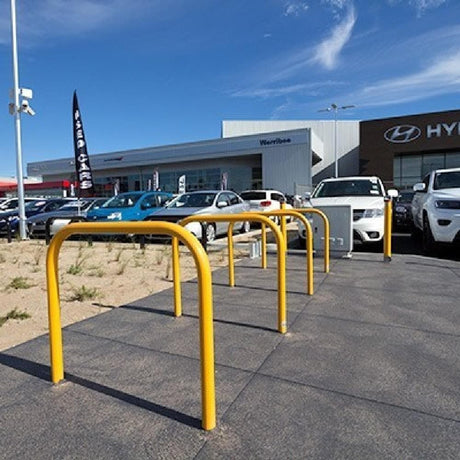
For temporary changes, portable traffic barriers are useful because they can be repositioned as access requirements change.
Warehouses and Industrial Sites
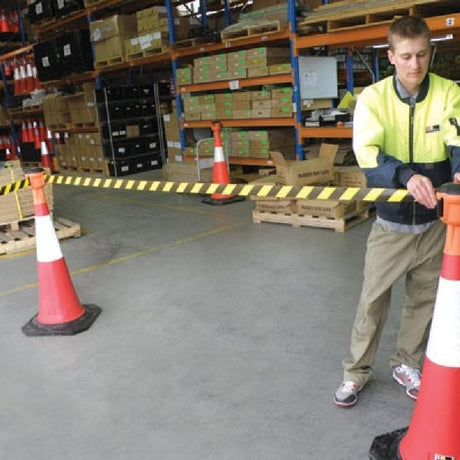
Think about what’s moving around the barrier. A temporary barrier is enough to identify a restricted area.
If forklifts or other moving equipment could come into contact with it, the site requires a higher level of protection suited to the hazard.
Events and Pedestrian Areas
When the main job is guiding pedestrians, managing queues or restricting access, portability and quick setup often matter more than the features required of road barriers.
In those situations, dedicated pedestrian barriers are a better fit.
Read our guide to the different types of crowd control barriers to compare your options.
Step 3: How Portable and Stable Does the Barrier Need to Be?

Check each barrier's weight, stability and intended use before installation.
Here's where choosing a barrier can become a balancing act.
If your crew regularly moves barriers around a site or transports them between jobs, you don’t want something unnecessarily difficult to handle.
Once the barriers are positioned, though, they need enough stability for the environment they’re being used in.
That’s one reason water-filled traffic barriers are useful for some temporary applications.
They’re easier to handle and transport when empty, then filled with water on site to add weight and stability.
Many designs can also be connected together to form a continuous barrier line.
When comparing your options, consider:
- Will you move them regularly? Frequent changes favour lighter, more portable traffic barriers.
- How will you transport and store them? Check the empty weight, dimensions and whether the barriers stack or nest.
- Will they remain in position for longer periods? A heavier or ballasted setup may be more practical.
- How will they be set up? If you’re considering water-filled barriers, make sure you have a suitable way to fill and empty them on site.
And remember: bigger doesn't automatically mean safer or more stable.
Check the manufacturer’s specifications, ballast requirements and intended use before deciding whether it suits your site.
Step 4: What Site Conditions Will the Barrier Face?
It's easy to choose based on how a barrier looks in a product photo. The better test is to imagine it on your site on a busy day.
Pay particular attention to:
- Weather: For outdoor use, look for materials suited to exposure to sun, rain and changing weather conditions.
- Wind: Lightweight barriers need additional ballast or a different setup in exposed areas. Always follow the manufacturer’s recommendations.
- Visibility: Bright colours and reflective features make traffic barriers easier to identify, particularly around roadworks, car parks and low-light areas.
- Ground conditions: Check that the barrier can be positioned securely on the surface you’re working with, especially if the ground is uneven.
- Frequency of use: Barriers that are regularly moved, loaded and unloaded need to stand up to repeated handling.
It’s worth thinking about pedestrians, vehicles and equipment as well as the barrier itself.
Site conditions can change throughout the day, so consider the busiest or most demanding situation the barrier is likely to face.
Step 5: What Should You Compare Before Buying?
Once you've narrowed down the type of barrier you need, compare the actual product specifications rather than relying on appearance alone.
Two barriers may look almost identical and still be intended for very different jobs. A quick check of the specifications now can save plenty of headaches later.

Compare dimensions, ballast, visibility and connection specifications.
Frequently Asked Questions About Traffic Barriers
What’s the difference between a traffic barrier and a safety barrier?
A traffic barrier is generally used to guide traffic, restrict access or separate vehicles and pedestrians.
A safety barrier is a broader term that includes systems designed to protect people, equipment or infrastructure from specific hazards.
The important bit is not to assume the name alone tells you what level of protection you're getting.
If vehicle impact protection is required, check whether that particular system is designed and tested for that purpose.
What should I look for in a barrier for short-term roadworks?
Start with visibility, portability and how straightforward the barrier is to install and remove.
Water-filled barriers work well in some temporary applications because they are easier to transport when empty and can be ballasted once positioned.
The barrier still needs to be appropriate for the road environment and the relevant traffic management plan.
When are water-filled traffic barriers useful?
They are worth considering when you want a combination of portability during transport and additional stability once they’re in position.
Depending on the individual product’s intended use, they can suit applications such as roadworks, construction sites, car parks and temporary work zones.

Different barrier designs suit different access and site requirements.
Can I use water-filled barriers on high-speed roads?
Not every water-filled barrier is suitable for high-speed traffic environments.
Suitability depends on the specific barrier system, its tested performance, the road environment and the traffic management requirements for the site.
Filling a portable barrier with water adds ballast, but that doesn’t automatically turn into a vehicle impact protection system.
What affects the cost of traffic barriers?
Size, material, design, features and quantity all affect the purchase price. It’s also worth considering transport, storage and setup.
The cheapest unit price won't necessarily mean the lowest overall cost if a barrier is difficult to store or move between sites.
How many traffic barriers will I need?
Start by measuring the total length you need to cover and compare that with the usable installed length of each barrier.
Don't forget corners, entrances, gaps and connection points. They all affect the final quantity, so check the individual product dimensions before ordering.
Ready to Narrow Down Your Options?
The right traffic barrier isn’t automatically the biggest, heaviest or most expensive. It’s the barrier that’s fit for the job and appropriate for the environment where you’ll use it.
Start with what you need the barrier to achieve, then compare portability, stability, visibility, dimensions, ballast requirements, storage and intended use.
If you're still weighing up your options, no worries.
You can browse Ramp Champ's barrier range and compare the specifications, or contact our team if you'd like a hand working out which options may suit your application.